Getting out of the airport
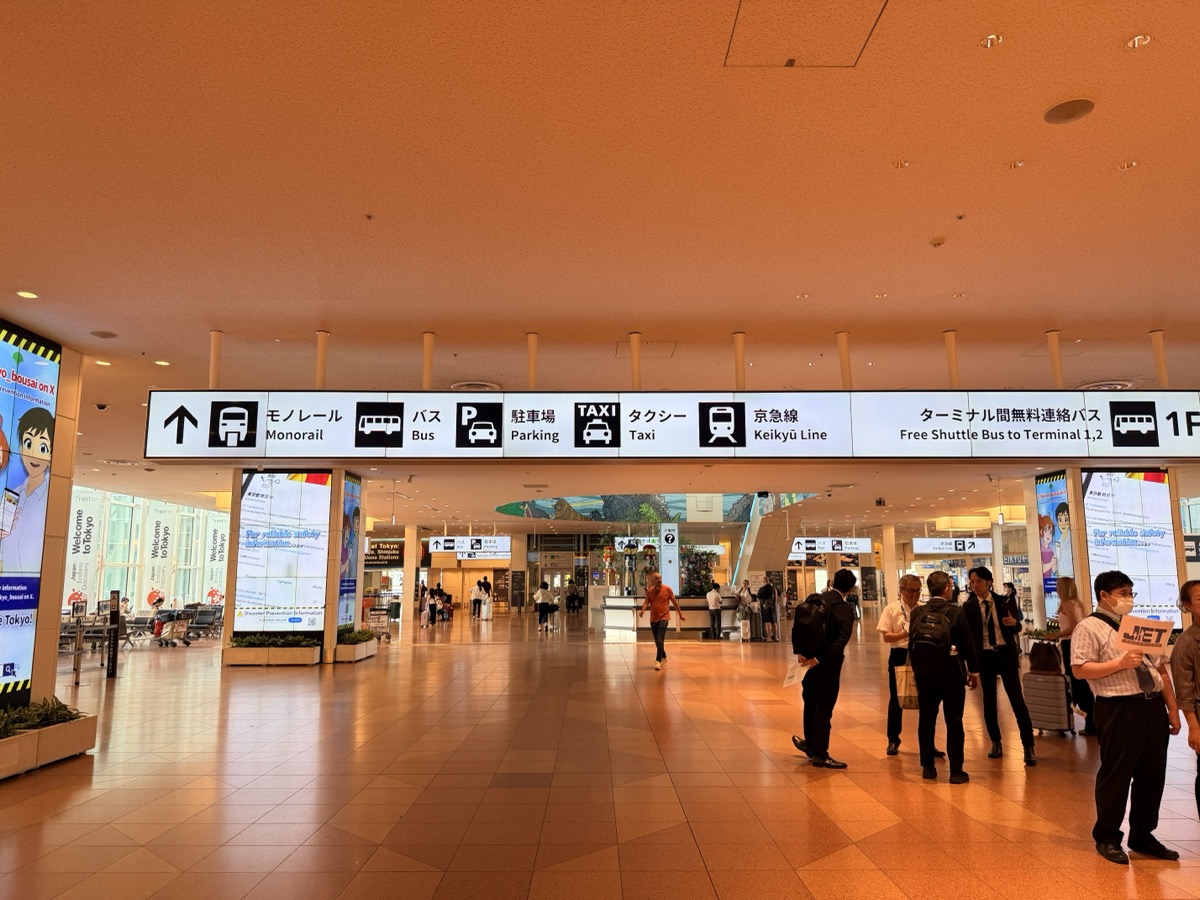
Haneda Keikyu vs Monorail: which one for your Tokyo destination
Take Keikyu.
Cheaper (¥327 IC to Shinagawa versus ¥519 to Hamamatsucho), more useful destinations reached directly, and Shinagawa is a better Yamanote transfer than Hamamatsucho for most of central Tokyo. Monorail wins in a few named cases — the counter will not tell you which.
Take Monorail if you are going to Hamamatsucho or Shimbashi directly, if you have a JR Pass, if you land on a day the ¥590 Monorail & Yamanote through ticket is sold and your destination is a Yamanote station, or if you are carrying heavy luggage and hit the weekday morning rush. Otherwise Keikyu.
Both trains stop running around midnight. Late arrivals should read the warning below before assuming a train is available.
| Going to | Take |
|---|---|
| Shinagawa (Shinkansen transfer) | Keikyu — direct, 11–20 min |
| Yokohama, southwest suburbs | Keikyu — direct or one transfer |
| Asakusa, Nihombashi, Higashi-ginza | Keikyu Asakusa-Line through service — direct, under 40 min |
| Shibuya, Shinjuku, Ikebukuro, Ueno | Keikyu → Yamanote at Shinagawa on weekdays |
| Same, on a day the ¥590 combo is sold | Monorail + Yamanote — saves ¥90–¥280 on the Monorail route |
| Hamamatsucho, Shimbashi | Monorail — direct |
| Anywhere on JR with a JR Pass | Monorail — covered by the pass |
| Terminal 1 or 2 | Keikyu one stop — free if you are connecting flights, see below |
| Keikyu | Tokyo Monorail | |
|---|---|---|
| Adult one-way (IC) | ¥327 to Shinagawa | ¥519 to Hamamatsucho |
| Service-tier surcharge | None | None |
| Fastest service | Airport Limited Express | Haneda Express, 13 min non-stop — but none at weekday rush |
| Combined frequency | Frequent; no figure published | ~5 min, the operator’s own figure |
| Luggage racks | None advertised | Yes on the newer 10000 series |
| First / last from T3 | 05:26 / 00:08 | 05:09 / 00:10 |
Take Keikyu if
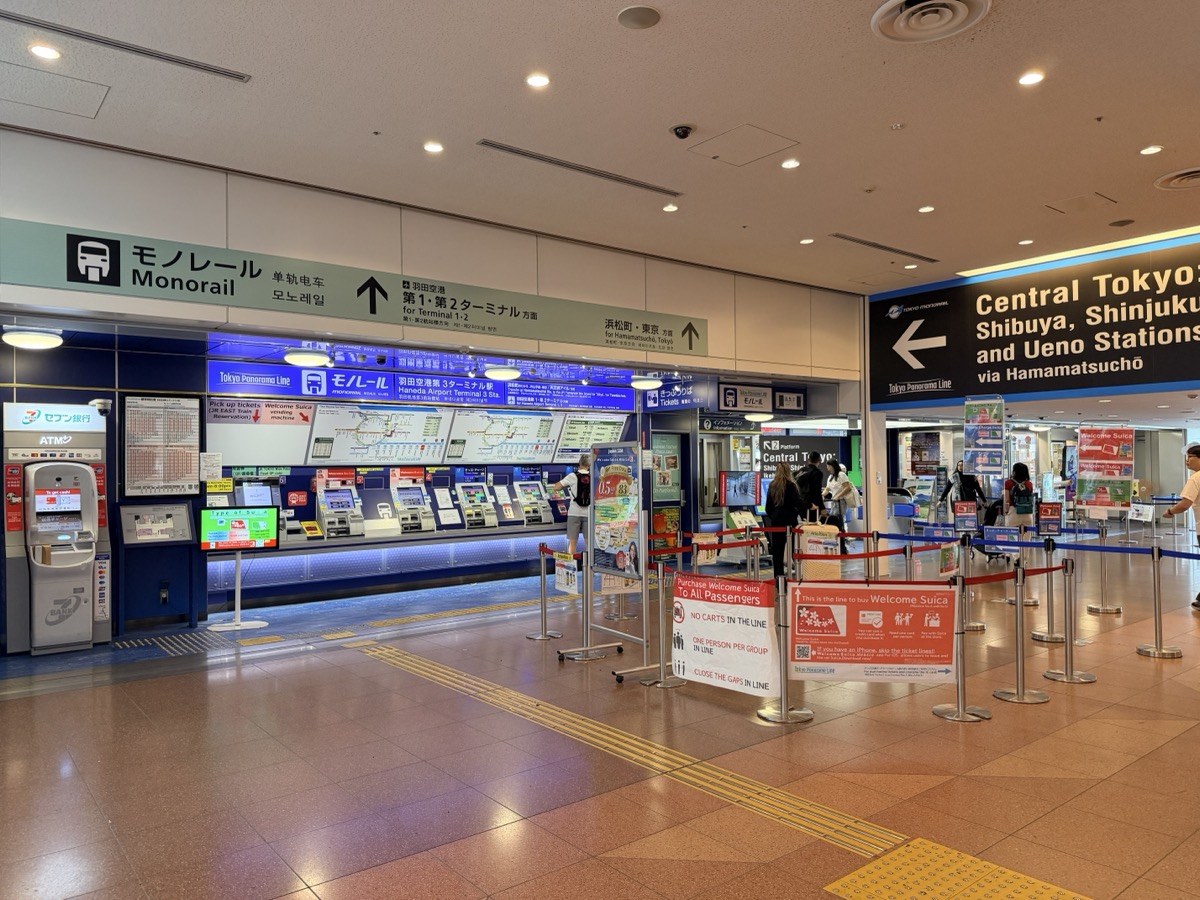
Keikyu is the default. You are almost certainly in this category unless one of the Monorail exceptions below applies to you.
From Haneda Terminal 3, Keikyu runs to Shinagawa for ¥327 on IC. Keikyu’s own figure is 11 minutes, which is the fastest Airport Limited Express; a mid-afternoon service takes closer to 20, and the last train of the night does it in 12. Assume a quarter of an hour and you will not be wrong by much. The same fare applies to every service pattern — Airport Limited Express, Airport Rapid, regular — because Keikyu charges no reserved-seat premium on this line. Shinagawa is a Shinkansen stop and a proper Yamanote interchange, which is why it is the transfer point for most of central Tokyo.
The Keikyu Airport Line through-runs onto the Toei Asakusa subway line without a transfer. If your destination is Asakusa, Nihombashi, or Higashi-ginza, look for a train showing “Asakusa” or “Oshiage” on the destination display — not every Keikyu train through-runs; some terminate at Shinagawa or Sengakuji. The through service reaches Asakusa in under 40 minutes for ¥610, one seat, no changes. This is old news for people who read Tokyo Cheapo, but the counter at Haneda will not offer it.
Keikyu is also the quickest way between Haneda’s international T3 and domestic T1 or T2 — one stop, two kilometres, ¥150. A free inter-terminal shuttle bus runs as well, from stand 0 on the ground floor at T3. It is well signposted and costs nothing, but it means a lift down and a wait.
And if you are connecting between an international and a domestic flight, that ¥150 should be nothing either. The airport gives out a free transfer voucher, good on Keikyu or the Monorail between T3 and T1 or T2, from one information counter in each terminal. You show a passport or a ticket to prove you are connecting. It is on the airport’s own website, in Japanese, and you have to know to ask.
You will see the KEIKYU Hanetoku + Tokyo Subway Ticket recommended everywhere. ¥1,600 for 24 hours, ¥2,100 for 48, ¥2,600 for 72 — each bundles a Haneda↔Sengakuji round trip on Keikyu with unlimited Tokyo Metro and Toei Subway. Do the arithmetic before you buy it.
A Keikyu return to Sengakuji is ¥660. The Tokyo Subway Ticket on its own is ¥1,000, ¥1,500 or ¥2,000. So the 48-hour bundle saves you ¥2,160 minus ¥2,100 — ¥60. The 24-hour and 72-hour versions save ¥60 as well. The bundle is not a deal; it is the same price with conditions attached.
And ¥60 is the best case. It assumes you come back to Haneda by Keikyu. Fly home from Narita, take the limousine bus, take a taxi, and the rail half goes unused: you paid ¥2,100 for ¥1,830 of travel and you are ¥270 down. It also cannot be bought at the airport — the operator says so plainly — so it has to be bought online before you fly, through ANA Airport Access, JAL MaaS or Tokyo Skytree, then exchanged at a Keikyu window. One more catch: the ticket is written for Haneda Terminal 1·2 Station, and if you exchange it at Terminal 3, where international flights land, you cannot get off at Terminal 1·2 on the way back.
For most central Tokyo destinations, Monorail loses on both fare and total journey time once you count the Yamanote transfer at Hamamatsucho. The Monorail counter will not tell you this.
Take Monorail if
There are four situations where Monorail is the correct answer. If none apply, you are in the Keikyu section above.
Your destination is Hamamatsucho or Shimbashi. Monorail runs there directly. The fastest service, Haneda Express, is non-stop and takes 13 minutes. Hamamatsucho is a JR Yamanote stop; Shimbashi is one stop further on the Yamanote.
But check the clock before you count on those 13 minutes. Haneda Express runs six times an hour through the middle of the day, and then, on weekdays, it stops. The operator’s own timetable shows no Haneda Express from Terminal 3 between 06:34 and 09:12, and none between 17:01 and 19:45. Those are the two windows when the line is busy carrying commuters, and they cover the commonest morning arrival slots. What you get instead is the all-stops local, which takes 18 minutes and calls at seven stations on the way. It is still a direct train, and it is still fine. It is just not the 13 minutes on the poster. At weekends and on public holidays there is no gap at all.
You have a JR Pass or a JR East Pass. Both cover Monorail in full. Keikyu is not JR and is not covered. Take Monorail. Skip the rest of this page.
You are landing on a day the ¥590 combo is sold and your destination is on the Yamanote loop. The Monorail & Yamanote Line Discount Ticket is ¥590 for adults and ¥290 for children, sold at the ticket machines at all three Haneda stations.
Two things about it are widely got wrong. It is a one-way through ticket, good for one journey — Haneda to any station inside the Yamanote loop, via Hamamatsucho. Not a day pass: no stopovers, and breaking the journey ends it. And it is not weekend-only. The operator publishes a date list whose blocks run continuously through the busiest arrival weeks — 18 July to 31 August is one, 26 December to 3 January another.
What it saves depends on where you are going, and the operator prints the comparison itself: ¥280 to Ikebukuro, ¥190 to Shinjuku or Shibuya, ¥140 to Ueno, ¥130 to Tokyo or Shinagawa, ¥90 to Shimbashi. Buy it for the far side of the loop. Ignore it for anywhere near Hamamatsucho.
You have heavy luggage and are landing during the weekday morning rush. Tokyo Monorail designed its newer 10000-series trains for airport passengers and says so: the stated aim was to answer the needs of overseas visitors, and the cars carry dedicated suitcase space. Older stock still runs, so this is not a guarantee on every train. Keikyu is a standard commuter line and advertises no luggage space at all; in our experience that means bench seats, small overhead racks, and a suitcase between your knees. Accept that on this one you will be on the 18-minute local rather than the 13-minute express, because the express is not running at that hour.
On weekdays going anywhere except Hamamatsucho, taking Monorail costs you an extra ¥192 in fare, requires a transfer at a worse interchange, and buys you nothing.
Who should NOT take either train
Late-night arrivals. The last Keikyu from Terminal 3 towards Shinagawa is 00:08. The last Monorail towards Hamamatsucho is 00:10 — two minutes later, which is not a plan. If your baggage claim empties after that, both trains have gone. Options are the limousine bus (until around 01:00 on some routes), an airport hotel, or a taxi.
Know what the taxi costs before you join that queue. Haneda runs on approved fixed fares to most Tokyo wards, and they are higher than the figure travel blogs quote: ¥7,600 to Chiyoda, ¥9,000 to Shinjuku, ¥9,100 to Taito for Ueno and Asakusa, ¥11,200 to Toshima for Ikebukuro. Expressway tolls are extra on top, and the fixed fare assumes the driver takes the expressway. Between 22:00 and 05:00 a higher fixed fare applies — Chiyoda becomes ¥9,000 and Ikebukuro ¥13,200 — which is precisely the window in which you are taking a taxi because the trains have stopped. A few near wards are not on the fixed-fare list at all and run on the meter.
You have no cash and no IC card set up in your phone. Both trains’ ticket machines take foreign cards, but if a machine refuses on the first try, the queue for a manned counter can be long. The manned counter with the shortest queue is at the Monorail ticket booth — described below — and it takes foreign credit cards for Welcome Suica purchases.
You are travelling with a car seat, a stroller, or a group of four with luggage. Take the taxi — but take it with your eyes open, because it does not win on money. Split four ways, a ¥9,000 fare to Shinjuku is ¥2,250 each against ¥327 on Keikyu, and that is before tolls. What you are buying is the door, the boot, and not dragging four suitcases through a Yamanote transfer. That is worth paying for with a toddler and a car seat. It is not worth paying for because someone told you taxis work out even for four.
One thing to do at the Monorail counter even if you are taking Keikyu
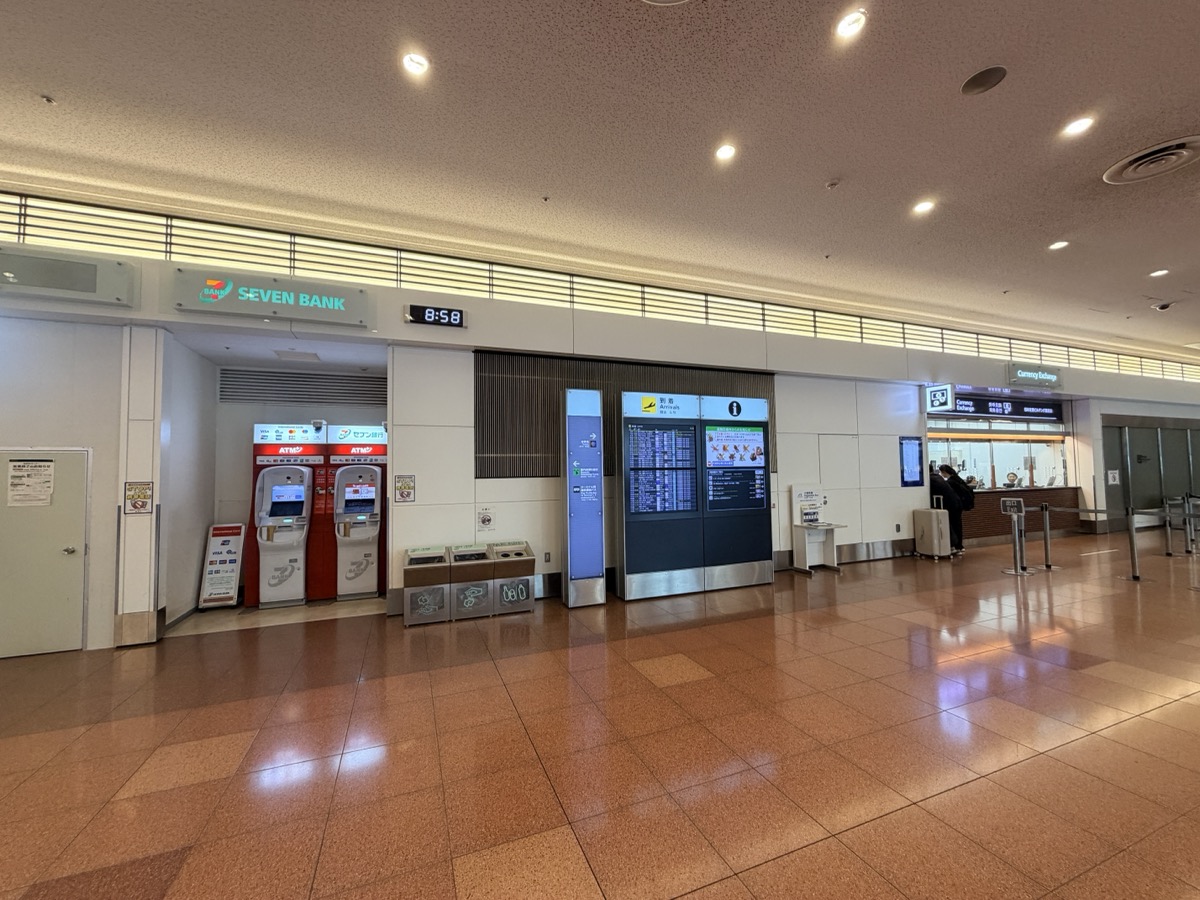
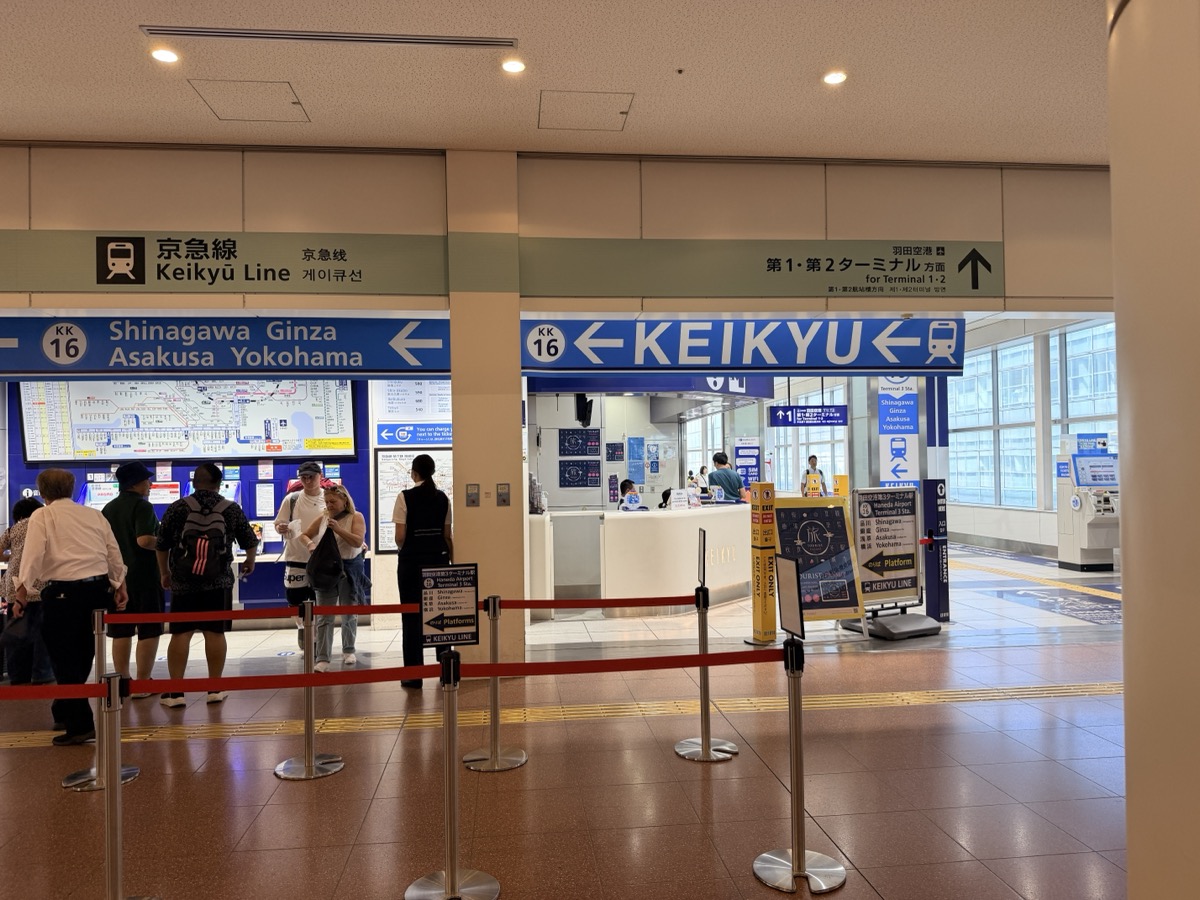
The Tokyo Monorail counter at Terminal 3 has a dedicated queue for Welcome Suica, the tourist IC card that takes foreign credit cards. If you did not set up a mobile IC card at home — because your phone is an overseas Android without FeliCa, or an older iPhone that does not run Welcome Suica Mobile — this is the fastest place at Haneda to buy a physical one. The machines are English-first, take foreign cards, and the queue is normally shorter than the Keikyu ticket machines a hundred metres away.
Buy the Suica at the Monorail counter, then walk over to the Keikyu concourse and tap in. The two-minute detour saves a foreign-card rejection loop and gets you onto a train faster than joining the Keikyu queue with no working payment.
The short answer
- Default → Keikyu to Shinagawa, transfer to Yamanote if needed
- Weekend + Yamanote hopping → Monorail + Yamanote ¥590 combo
- Hamamatsucho or Shimbashi → Monorail direct
- JR Pass in hand → Monorail (covered)
- Asakusa, Nihombashi → Keikyu Asakusa-Line through service (one seat, no transfer)
- Terminal 1 or 2 → Keikyu one stop — ask for the free transfer voucher if you are connecting
- Two-plus days of heavy metro → KEIKYU Hanetoku + Tokyo Subway bundle
- Landed after midnight → Neither. Bus, taxi, or airport hotel.
And whatever you do, set up your Welcome Suica or the physical card before you join the ticket queue.