Getting out of the airport
N'EX vs Skyliner: which one for your Tokyo destination
On time, it is a coin flip. On price, Skyliner wins everywhere.
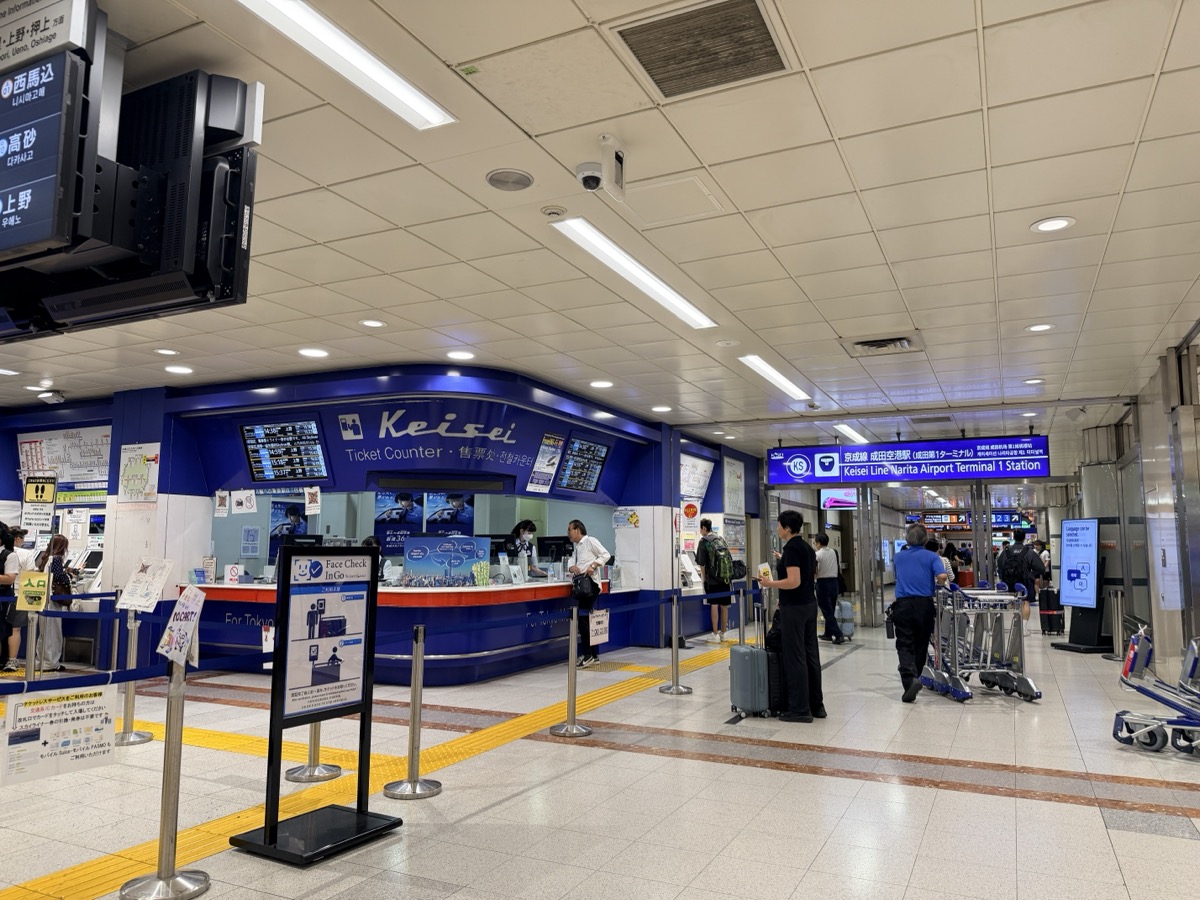
Measured door to door — platform to platform, waiting and transfers included — N'EX is quicker to some places and Skyliner to others, and the gap is single-digit minutes either way for most of them. Skyliner is cheaper to every destination we checked, by ¥220 to ¥620. The honest answer is that the time argument barely exists, so decide on price, on luggage, and on whether you hold a JR Pass.
Nippori or Ueno: Skyliner, direct, no argument. Tokyo Station: N'EX is about eleven minutes quicker for ¥360 more. Ikebukuro: Skyliner is twenty minutes quicker and ¥540 cheaper. Everywhere else is close enough that the cheaper ticket should decide it.
Cheaper alternatives exist. Each has one narrow use case, covered below.
| Going to | Take |
|---|---|
| Nippori | Skyliner — direct, 47 min, ¥2,580 |
| Ueno | Skyliner — direct, 59 min, ¥2,580 |
| Tokyo Station | N'EX — 55 min against 66; costs ¥360 more |
| Ikebukuro | Skyliner — 68 min against 88, and ¥540 cheaper |
| Shinjuku | Either — 77 min against 81. Skyliner saves ¥490 |
| Shibuya | Either — N'EX 75 min against 84, for ¥490 more |
| Yokohama | Either — 91 min against 93. Skyliner saves ¥620 |
| Omiya | Skyliner — 96 min against 100, and ¥220 cheaper |
| Asakusa, Nihombashi | Neither. Take Access Express (below) |
| JR Pass in hand | N'EX — it is free; nothing else competes |
| Skyliner | N'EX | |
|---|---|---|
| Adult one-way (station) | ¥2,580 to Nippori or Ueno | ¥3,140 to Tokyo, ¥3,330 to Shinjuku or Shibuya |
| Discount option | Several, none general — see below | ¥5,200 round-trip (any N'EX Tokyo station, 14 days) |
| Frequency | 20–40 min | 30–60 min |
| First / last from NRT T1 | 07:26 / 22:30 | 07:37 / 21:44 |
| JR Pass | Not covered | Fully covered, seat included |
Take Skyliner if
If you are going to Ueno or Nippori: Skyliner is the answer, direct. Keisei advertises 36 minutes to Nippori and that is the running time; door to door, waiting for the next departure included, allow about 47. Ueno is 59. That is the only case where the choice needs no thought.
Everywhere else on the Yamanote loop — Shinjuku, Shibuya, Ikebukuro, Akihabara, anywhere the loop reaches — becomes a Skyliner-plus-transfer question. The Nippori transfer is short: three to five minutes, indoors, with escalators, exiting the Keisei gate and entering the JR gate to reach the Yamanote platform. From there, Yamanote puts Ikebukuro at 12 minutes, Shinjuku at 20, Shibuya at 26. Clockwise, Tokyo Station is 8.
Do that maths against N'EX door to door and it comes out close. The Skyliner route wins to Ikebukuro by twenty minutes, to Shinjuku by four and to Omiya by four. N'EX wins to Tokyo Station by eleven and to Shibuya by nine. Yokohama is two minutes apart. Nobody has a speed advantage worth the word. What differs reliably is the price and the transfer — Skyliner is cheaper to every one of those places, and N'EX gets you there without moving your bags.
Skyliner at the station is ¥2,580 one-way, and Keisei prints the two halves on its own page: a ¥1,280 fare plus a ¥1,300 Liner ticket. A return is ¥5,160.
If you plan to use the Tokyo metro heavily, look at the Skyliner + Tokyo Subway bundles instead. One-way plus a 24-hour subway pass is ¥3,100 against ¥3,580 bought separately; 48-hour is ¥3,600 and 72-hour ¥4,100. The return versions are ¥5,100, ¥5,600 and ¥6,100. Those are the prices that matter when you compare against N'EX below.
Face Check In/Go
Skyliner rolled out face-recognition boarding in January 2025. If you have a Skyliner e-ticket, you can register a photo at purchase, then walk through a face-scan tablet at Keisei-Ueno, Nippori, or either Narita station — no counter stop needed. It replaces the slowest part of the Skyliner journey when the airport is busy. One catch: at your destination station you have to exit through a manned gate, not the automatic one, and hand over your ticket.
Take N'EX if
Take N'EX if you cannot move yourself and your bags at Nippori — or you have a JR Pass.
N'EX reaches Tokyo Station in 55 minutes for ¥3,140, Shibuya in 75 and Shinjuku in 81, both ¥3,330. Every seat is reserved; there are no unreserved cars.
Be careful with the word “direct”. The network map shows N'EX serving Ikebukuro, Yokohama, Ofuna and Omiya as well, and it does — but not on every train. N'EX splits at Tokyo and which half goes where changes through the day. Searching a weekday early afternoon, Ikebukuro and Omiya came back only with a change at Tokyo, and Yokohama only with a change at Shinagawa. If you are buying N'EX because you do not want to move your bags, check that your particular train goes where you are going, rather than trusting the map at the counter.
If you are coming back through Narita, the N'EX Tokyo Round Trip Ticket at ¥5,200 (adult, valid 14 days) covers any station in the N'EX Tokyo network. Against two singles to Tokyo Station at ¥3,140 each, that is about a sixth off, and it saves more the further out you go.
Here is the comparison the counter will not make for you. Two Skyliner singles come to ¥5,160 — forty yen less than the N'EX round trip. And Keisei bundles a Skyliner round trip with a 24-hour Tokyo Subway pass for ¥5,100: a hundred yen less than the N'EX ticket alone, with every Tokyo Metro and Toei line thrown in for a day. The 48-hour bundle is ¥5,600 and the 72-hour ¥6,100.
Read the conditions before you count on it. Those bundle prices are Keisei's, and the cheaper versions are tied to how you buy them — some through particular low-cost carriers, some from vending machines at specific regional airports, several currently suspended. Skyliner's other discounts are narrower still: one is a leaflet you have to pick up in Matsuyama. There is no plain online price anyone can buy. Check what actually applies to you rather than assuming a cheaper Skyliner ticket exists.
If you have a JR Pass, take N'EX. The Pass covers it in full, reserved seat included, no additional payment. Reserve the seat at any JR ticket office at Narita before boarding — the pass does not need to be activated at Narita; an already-active pass covers the ride.
Luggage is why. Every N'EX car has dedicated storage at the ends of the carriage for suitcases up to 160cm total dimensions — first-come, first-served, no reservation needed. Anything larger requires a dial-locked oversized-luggage seat, reserved at the ticket counter and stored behind the seat itself. If you have a big case and do not want to hoist it onto a rack or drag it through a Nippori transfer, that dial-locked slot is why N'EX exists.
The two cheaper options, briefly
The Airport Bus TYO-NRT runs to Tokyo Station for ¥1,500 in about 65 minutes, up to 90 in traffic. It leaves roughly every 10 minutes at peak. Late-night and early-morning services cost ¥3,000. The bus is the merger of two brands you may still see mentioned — Access Narita and Tokyo Shuttle — into one product jointly operated by JR Bus Kanto, B-Trans, and Keisei Group. If you are going to Yaesu-side Tokyo Station hotels off-peak, or your flight lands after the trains have stopped, it is the answer.
The regular Keisei Access Express runs direct from Narita to Asakusa in an hour or a little more for ¥1,380 — we measured 59 minutes on one search and 71 on another, so treat an hour as the floor. No reserved seat, no surcharge. For Asakusa, nothing about Skyliner is worth the money: it costs nearly twice as much, it does not go there, and the time you buy back is single-digit minutes. Nobody at the Skyliner counter will tell you this. The tradeoff is standard commuter seating with your luggage on your knees, which is not a small thing after a long flight.
Who should NOT take either fast train
If you land after the trains have stopped. The last Skyliner from Narita Terminal 1 leaves at 22:30. The last N'EX at 21:44. If your baggage claim empties at 22:15, N'EX is already gone. Airport Bus TYO-NRT runs later — the last to Tokyo Station is close to 23:20 — and after that it is a taxi or an airport hotel.
If you have no yen and no IC card set up in your phone. Both fast trains' ticket machines are card-friendly, but if a machine refuses your foreign card on the first try, the wait for a manned counter in a bad queue is real. Sort a Welcome Suica Mobile or Tourist PASMO before you leave the arrivals hall, then join the fast-train line with a working payment method.
If you are travelling with infants, a stroller, or someone with mobility issues. The Nippori transfer is short but includes a platform change; lifts exist but queue. N'EX's dial-locked luggage slot is a reasonable answer here, and honestly, a door-to-door taxi is worth its cost if your group is small and tired.
The short answer
- Nippori / Ueno → Skyliner, direct (47 and 59 min, ¥2,580)
- Tokyo Station → N'EX, eleven minutes quicker for ¥360 more
- Ikebukuro → Skyliner, quicker and cheaper — the one clear win
- Shinjuku, Shibuya, Yokohama, Omiya → a wash on time; take the cheaper ticket unless your bags decide it
- Heavy bags, any destination → N'EX, for the luggage racks and no transfer
- Asakusa → Access Express (¥1,380, an hour or a little more)
- JR Pass in hand → N'EX (free, seat reserved at any JR counter at Narita)
- Round-trip through Narita → compare the N'EX round trip at ¥5,200 against two Skyliner singles at ¥2,580
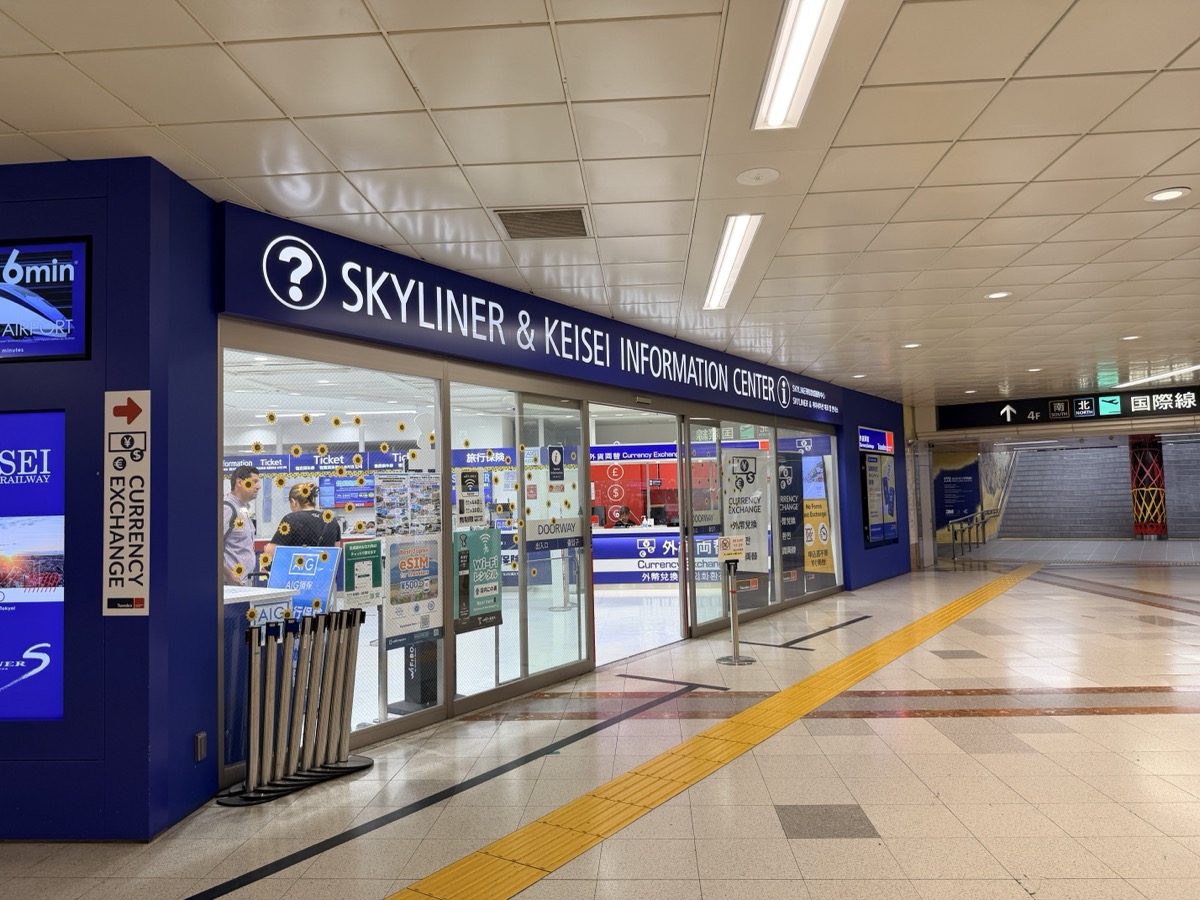
Walk past the exchange counter on the way to the platform.